Your cold room runs around the clock and in Australia’s heat and humidity, that means your electricity metre rarely gets a rest. For commercial kitchens, food businesses and warehouses across the land, refrigeration is consistently one of the largest items on the power bill, and often one of the most overlooked when looking for savings.
The good news is that meaningful reductions don’t always require a full system replacement. Some of the biggest gains come from operational habits and basic maintenance. This guide draws on our hands-on experience designing and installing commercial cold rooms throughout Australia, where the climate creates unique and constant demands on refrigeration equipment.
Getting on top of efficiency helps in two ways: lower power bills now, and less wear on your equipment over time.
Ways to Lower Your Cold Room Power Bills
1. Shut the Door Immediately
This is the most common (and costly!) issue we see across various sites.
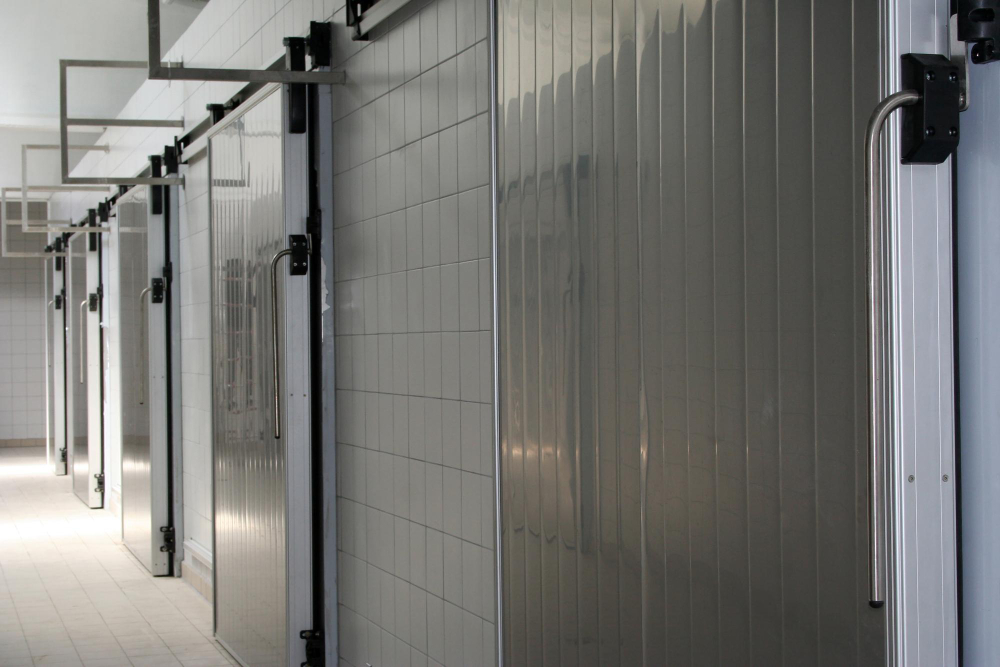
Every time a cold room door is left open during deliveries, warm humid air rushes inside. That moisture freezes on the evaporator coils, forcing the system into longer and more frequent defrost cycles. You end up paying twice: once to cool the warm air that entered, and again to remove the ice it created.
Two changes make a real difference here: train staff to close the door immediately after entry, and fit PVC strip curtains to reduce air exchange during loading. Both are low-cost steps that noticeably reduce compressor workload.
2. Check Your Seals and Panels
A cold room only performs as well as its envelope allows.
Door gaskets degrade with heavy use, particularly in busy kitchens and warehouse environments. Even a minor gap causes continuous cold air loss and steady warm air infiltration, neither of which shows up obviously until the power bill arrives.
A quick check: close the door on a piece of paper. If it slides out without resistance, the seal needs replacing.
Panel integrity matters just as much and older cold rooms often develop separation at joints over time, reducing insulation performance and allowing heat to transfer in from outside. Properly engineered panels form a complete thermal barrier, which is something that becomes especially important in the summer months.
3. Don’t Block the Airflow
Overstocking is a surprisingly common energy drain.
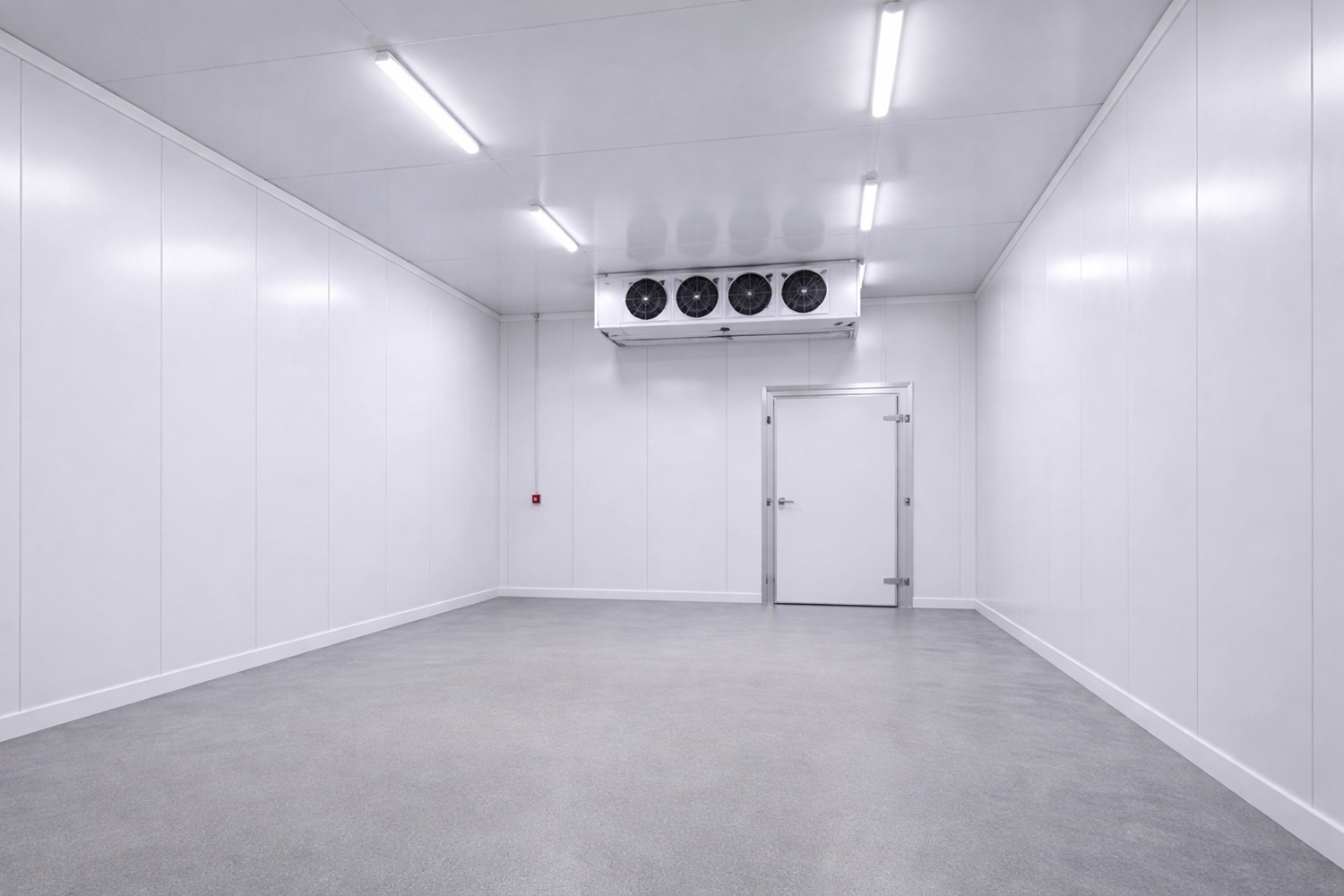
Cold rooms depend on consistent airflow to maintain even temperatures throughout the space. When stock is pushed against walls, stacked to the ceiling, or placed in front of the fan unit, cold air short-circuits back to the evaporator before it has circulated properly. The system shuts off prematurely, temperatures at the back of the room creep up, and operators often respond by lowering the thermostat, which then just increases energy use further.
Keep stock clear of walls, ceilings and the evaporator unit. Maintaining clear airflow channels throughout the room is one of the simplest ways to keep temperatures stable and running costs down.
4. Switch to LED Lighting
Standard bulbs generate heat and in a cold room, that heat becomes a load your refrigeration system has to work against. Upgrading to LED lighting reduces both the heat load and the energy consumed by the lights themselves. Adding motion sensors ensures the lights are only on when someone is actually in the room. It’s a straightforward upgrade with a short payback period.
5. Keep the Condenser Clean
The condenser is responsible for releasing heat from the refrigeration system. If airflow through the coils is restricted, the compressor has to work harder and run longer to compensate.
Dust, grease and debris build up over time and this particularly prevalent in commercial kitchen environments. Regular cleaning of the condenser fins with a brush or low-pressure air, combined with keeping adequate clearance around the unit, can make a noticeable difference to energy consumption without any significant cost or downtime.
6. Consider a Modern System
If your cold room is ageing and seems to run constantly, the efficiency losses may be structural rather than operational.
Insulation degrades over time, motors and compressors become less efficient as components wear. At a certain point, no amount of maintenance will recover the performance of a well designed modern system. Contemporary cold rooms are built with high performance insulation panels, energy efficient compressors, and improved sealing and airflow design. In a high demand environment, the reduction in running costs from a properly engineered replacement often justifies the investment within a reasonable timeframe.
Time to Upgrade?
If you’d like tailored advice or want to discuss your options, get in touch with Auscool. We work with businesses across commercial kitchens, food production and warehousing to design and install cold rooms that perform efficiently for the long term.